

Dr. Dino Prato and the Push Toward More Individualized Cancer Care
The Envita founder’s precision-medicine vision brings tumor profiling and targeted delivery into the same conversation. His team’s CIPI work offers a concrete example—and questions that further research must answer.
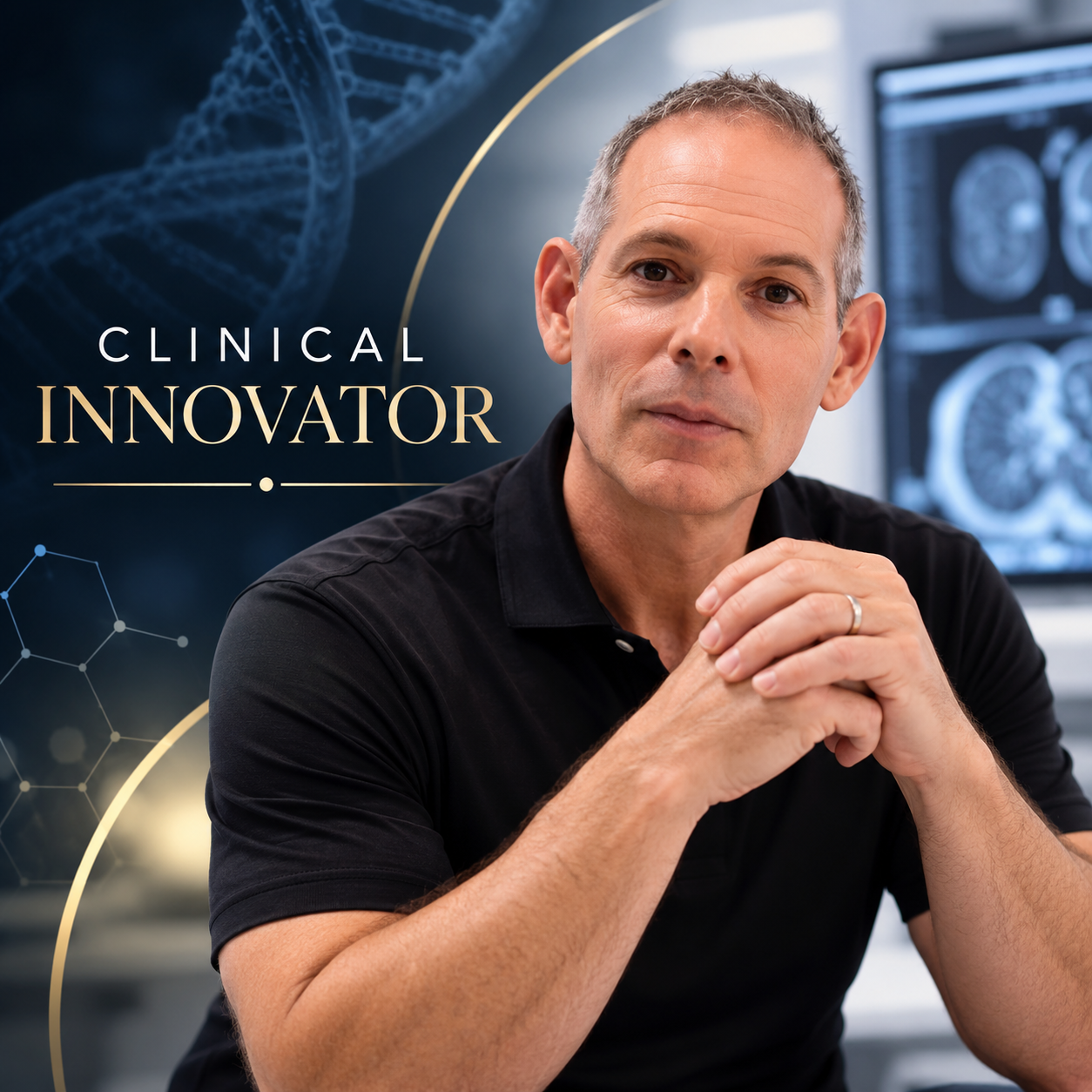
For Dr. Dino Prato, the central question in cancer care is how closely a treatment plan can reflect the individual receiving it. His public biography describes a career focused on personalized treatment and N-of-1 targeting: an approach organized around the particular patient rather than an assumed average. It identifies him as a naturopathic doctor and the founder and CEO of Envita Medical Centers, established in 2001. [1]
That vision provides the starting point for this Clinical Innovators profile. The interesting question is how a personalized-care philosophy becomes a treatment process—and how its results can be evaluated.
Connecting the treatment choice to its destination
One example is Chemo Immuno Precision Injection, or CIPI, described in a December 2025 paper coauthored by Prato and colleagues affiliated with Envita. The authors present it as an image-guided platform combining individualized drug selection with delivery into a tumor or its supplying arteries. Depending on anatomy and access, their description includes needle-based injections and catheter-based delivery. [2]
The distinction matters: selecting a treatment and deciding how to deliver it are related but separate clinical decisions. The paper positions CIPI at that intersection. This is the treating organization’s description of its approach, not an independent comparative assessment. [2]
Where precision medicine fits
Precision medicine is broader than any single clinic or branded procedure. The National Cancer Institute explains that biomarker testing can help identify treatments more likely to work, or treatments unlikely to help. It also emphasizes that standard cancer care is itself personalized and effective. [3]
Testing does not guarantee a useful treatment match. A potentially relevant therapy may be unavailable, or a matched treatment may still fail. Different cancer cells can carry different biomarkers, and those features can change over time. [3]
For readers, that makes the practical question more specific than whether a clinic offers precision medicine: which findings actually change a treatment decision, and what evidence supports that choice?
What the published example can tell us
The Envita paper describes a 67-year-old man with advanced neuroendocrine carcinoma who received a combination of CIPI, systemic treatment and supportive interventions. The authors report stable disease following the treatment course. [2]
A single-patient report can document a clinical experience. It cannot determine which component caused an outcome, establish an average benefit, or prove superiority over another treatment. Independent comparative research would be needed to answer those broader questions. [2]
An innovation agenda worth examining
Prato’s stated ambition is to reduce trial-and-error and organize care around individual biology and quality-of-life priorities. His biography presents that ambition as central to his leadership. [1]
A useful profile of innovation should make the proposed advance understandable while leaving room for scrutiny. For this approach, the next questions concern patient selection, treatment risks, reproducible outcomes and the strength of comparisons with established options.
Readers discussing a similar approach with their oncology team can ask: What evidence applies to my cancer type? Which parts of the plan are established and which are investigational? How will benefits, side effects and treatment failure be measured?
Sources
- [1]Dr. Dino Prato, official biography — drdinoprato.com
- [2]Goklany et al., “Pioneering Personalized Precision Medicine: Direct-to-Tumor Interventional Radiology at Envita Medical Centers,” Journal of Cancer Therapy, December 2025 — Journal of Cancer Therapy
- [3]National Cancer Institute, “Biomarker Testing for Cancer Treatment” — National Cancer Institute