

Mapping Tumor Antigens in Gliomas with Immunopeptidomics
An emerging mass spectrometry approach helps identify naturally presented peptides to guide personalized brain tumor therapies.
Key takeaways
- Gliomas and glioblastomas are highly aggressive brain tumors that resist standard therapies and create an immunosuppressive microenvironment.
- Immunopeptidomics uses mass spectrometry to identify naturally presented HLA-bound peptides directly from glioma tissues.
- This technology helps map HLA class I and II antigen presentation, assisting in the development of personalized peptide vaccines.
- Plasma-derived soluble HLA (sHLA) peptidomes show potential as minimally invasive liquid-biopsy biomarkers for disease monitoring and response to treatment.
The aggressive and treatment-resistant nature of gliomas, particularly glioblastomas, presents a persistent challenge in oncology. Currently available standard therapeutic approaches—which include surgical resection, radiotherapy, and chemotherapy—offer only limited long-term survival benefits for patients. This limited clinical efficacy is driven in large part by a highly immunosuppressive tumor microenvironment that characterizes gliomas, enabling immune evasion and restricting the effectiveness of the body's natural anti-tumor immune response.
To overcome these barriers, there is an urgent need to identify tumor antigens with clinical relevance. Finding these antigens is crucial for improving current immunotherapeutic strategies and enhancing overall glioma immunogenicity. A review published in the journal Biochimica et biophysica acta. Reviews on cancer in September 2026 explores how the growing field of immunopeptidomics is helping researchers decode these complex systems to guide future precision medicine efforts.
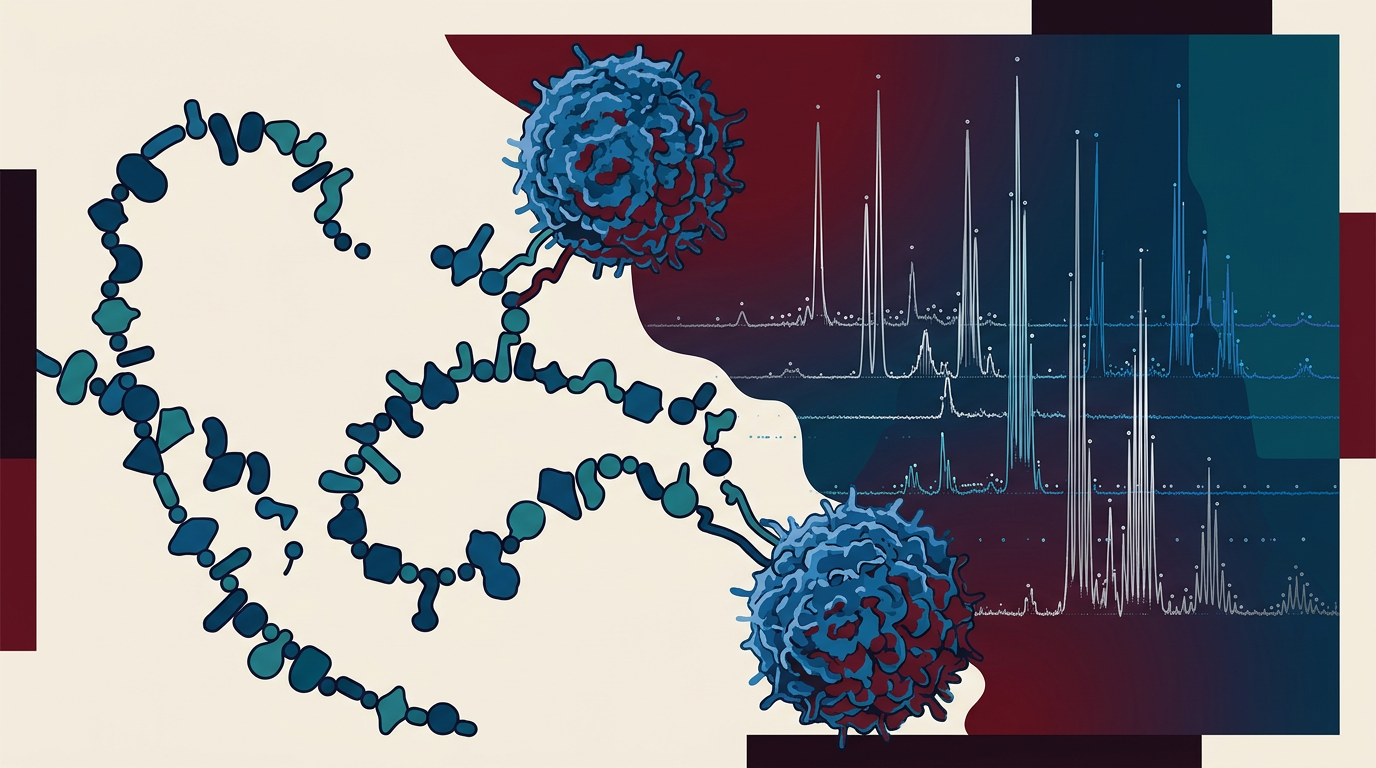
Immunopeptidomics uses mass spectrometry-based technology to identify the peptides presented by human leukocyte antigen (HLA) molecules. By enabling the direct identification of naturally presented, HLA-bound peptides from tumor tissue for T cell recognition, this approach offers valuable insights into tumor antigen presentation and potential immune targeting pathways.
What Happened
The published review highlights the emerging role of immunopeptidomics in decoding gliomas. The authors cover the mechanisms of antigen processing and presentation by both HLA class I and class II molecules. By utilizing mass spectrometry to identify naturally presented HLA-bound peptides directly from tumor tissue, researchers can map out glioma-associated antigens. The review details how these findings support the development of personalized peptide vaccines and the discovery of new targets for T cell-based immunotherapies. Additionally, the paper discusses the potential of plasma-derived soluble HLA (sHLA) peptidomes, which could serve as minimally invasive liquid-biopsy biomarkers for disease monitoring and tracking patient response to treatment.
What The Evidence Shows
The review, published in the September 2026 issue of Biochimica et biophysica acta. Reviews on cancer (PMID: 42697339), evaluates immunopeptidomics as an emerging tool for glioma research. The review details the technology's capability to directly identify naturally presented HLA-bound peptides from tumor tissue. This process helps clarify how glioma-associated antigens are processed and presented by HLA class I and class II molecules to T cells, offering a biological foundation for personalized vaccines and T cell-based therapies. It also highlights the potential of plasma-derived sHLA peptidomes as non-invasive biomarkers.
What We Don't Know Yet
The published review does not report specific clinical trial data, statistical patient outcomes, or safety profiles for immunopeptidomics-directed therapies, as it is a review of an emerging field of research. The source text does not detail specific technical limitations of mass spectrometry in this context or the exact timeline for translating these tools into standard clinical practice.
What Comes Next
The primary source does not outline specific planned clinical trials or next steps by researchers or sponsors. The development of personalized peptide vaccines and plasma-derived sHLA biomarkers remains an open area of research aimed at enhancing glioma immunogenicity and improving therapeutic outcomes.
What This Means
For clinical research in precision oncology, immunopeptidomics is foreseen as a powerful tool for discovering novel tumor antigens. This technology could lead to highly personalized glioma immunotherapies, such as customized peptide vaccines and targeted T cell therapies. Furthermore, utilizing soluble HLA peptidomes from blood plasma as liquid biopsies could provide a minimally invasive method to track disease progression and evaluate patient response to ongoing treatment.
Original Source
PubMed (NCBI E-utilities): https://pubmed.ncbi.nlm.nih.gov/42697339/
Questions readers ask
- What is immunopeptidomics?
- Immunopeptidomics is a mass spectrometry-based research method used to identify peptides presented by HLA molecules. In glioma research, it helps scientists directly identify naturally presented, HLA-bound peptides from tumor tissues for T cell recognition.
- How can immunopeptidomics help treat gliomas?
- This technology identifies glioma-associated antigens to help develop personalized peptide vaccines and discover new targets for T cell-based immunotherapies. By decoding these antigens, researchers hope to enhance glioma immunogenicity.
- Can immunopeptidomics be used as a biomarker?
- Yes, plasma-derived soluble HLA (sHLA) peptidomes are being investigated as potential liquid-biopsy biomarkers. These could offer a minimally invasive way to monitor glioma progression and track how patients respond to treatment.
What this means
For clinical research in precision oncology, immunopeptidomics is foreseen as a powerful tool for discovering novel tumor antigens. This technology could lead to highly personalized glioma immunotherapies, such as customized peptide vaccines and targeted T cell therapies. Furthermore, utilizing soluble HLA peptidomes from blood plasma as liquid biopsies could provide a minimally invasive method to track disease progression and evaluate patient response to ongoing treatment.
Limitations and uncertainties
- The published review does not report specific clinical trial data, statistical patient outcomes, or safety profiles for immunopeptidomics-directed therapies, as it is a review of an emerging field of research. The source text does not detail specific technical limitations of mass spectrometry in this context or the exact timeline for translating these tools into standard clinical practice.
Sources
- Immunopeptidomics in gliomas: Decoding antigen presentation for precision immunotherapy. — PubMed (NCBI E-utilities)