
Study Explores How Oxygen Levels Reshape Tumor Signaling in Liver Cancer
Research indicates the lncRNA MIR100HG behaves differently depending on cellular oxygen levels, acting as a context-dependent regulator in liver cancer cells.
Key takeaways
- MIR100HG acts as a context-dependent oncogenic regulator in hepatocellular carcinoma cells.
- Overexpressing MIR100HG increases cell proliferation, migration, and invasion, while silencing it suppresses these traits and increases cell death.
- Under normoxic conditions, MIR100HG promotes oncogenic signaling through p38/MAPK and AKT pathways.
- Hypoxia-mimicking conditions prevent the maintenance of this pathway activation and reverse the expression patterns of regulatory genes like GAS6 and PTEN.
- MIR100HG represents a potential biomarker and therapeutic target in liver cancer.
Hepatocellular carcinoma remains one of the leading causes of cancer-related mortality worldwide. This aggressive liver cancer is characterized by a hypoxic tumor microenvironment, an oxygen-depleted state that promotes tumor progression, cellular adaptation, and therapeutic resistance. While researchers understand that long non-coding RNAs (lncRNAs) play critical roles in regulating tumor-associated signaling networks, the specific contribution of an lncRNA named MIR100HG in hepatocellular carcinoma has remained insufficiently understood, particularly when oxygen levels are limited.
In a laboratory study published in the journal Functional & integrative genomics in September 2026, researchers investigated the expression patterns and functional significance of MIR100HG under different oxygenation conditions. By studying epithelial-like Hep3B and mesenchymal-like SNU-398 liver cancer cells alongside Clone-9 non-tumor liver cells, the research team demonstrated that the surrounding oxygen levels actively reshape how this genetic regulator signals within the cells.
What Happened
Using gain- and loss-of-function laboratory techniques, researchers evaluated the impact of MIR100HG on tumor-associated cellular phenotypes under both normal oxygen (normoxic) and low-oxygen (hypoxic) conditions.
When MIR100HG was overexpressed, it significantly enhanced cell proliferation, clonogenic potential, migration, and invasion. Conversely, silencing MIR100HG suppressed these tumorigenic properties and increased apoptotic cell death.
The molecular mechanisms underlying these changes proved highly dependent on cellular oxygenation. Under normoxic conditions, MIR100HG promoted oncogenic signaling through the p38/MAPK and AKT pathways, and its depletion reduced the phosphorylation of these key signaling proteins. However, under hypoxia-mimicking conditions, this p38/MAPK and AKT activation was not maintained. Additionally, the expression patterns of AKT-associated regulatory genes, including GAS6 and PTEN, were reversed under hypoxia-mimicking conditions, demonstrating that hypoxia reshapes the downstream signaling of MIR100HG.
What The Evidence Shows
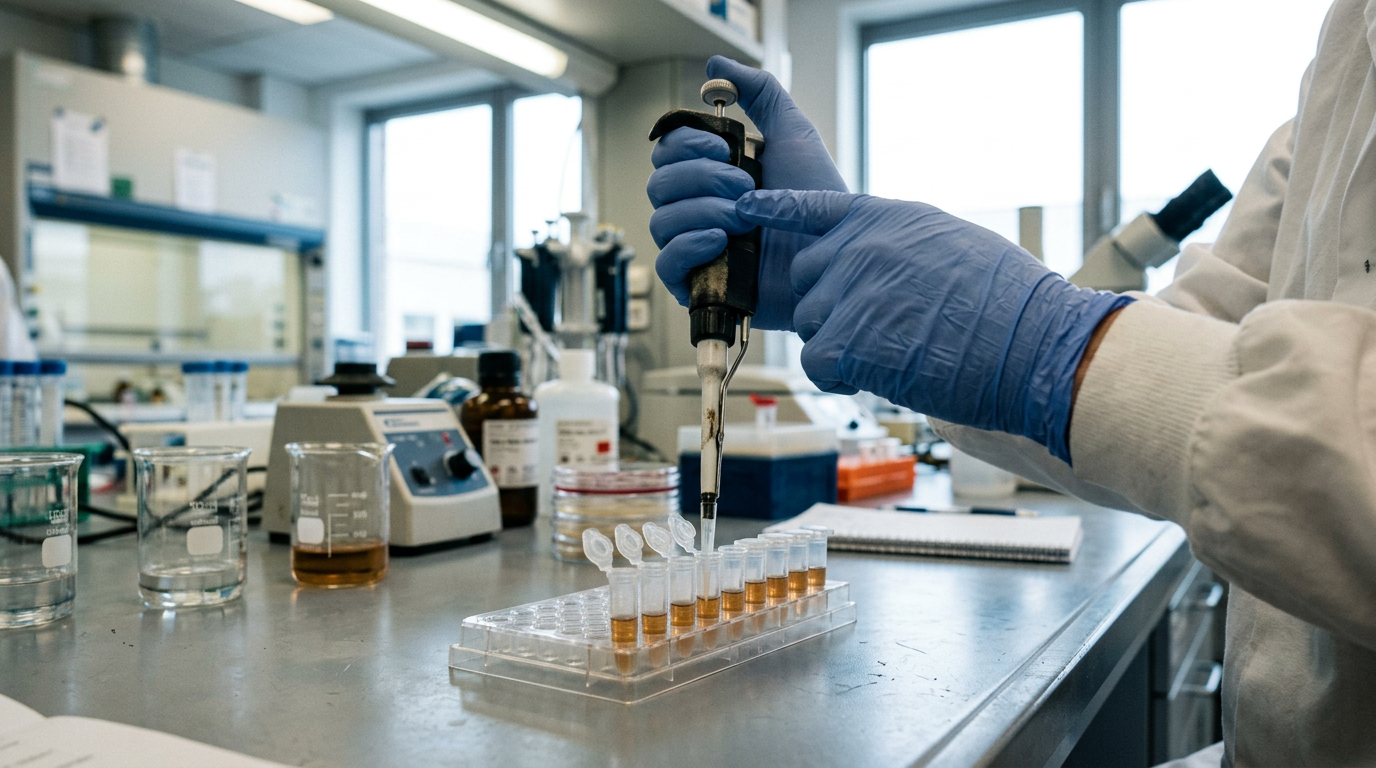
The study published in Functional & integrative genomics utilized in vitro analyses of two hepatocellular carcinoma cell lines (Hep3B and SNU-398) and one non-tumor hepatocyte line (Clone-9) to evaluate genetic overexpression and silencing under normoxia and simulated hypoxia.
What We Don't Know Yet
The study was conducted entirely in laboratory cell cultures, and the published source does not report statistical p-values, sample sizes, or findings from animal models or human clinical trials. Consequently, it remains unknown how these molecular mechanisms translate to live organisms or human patients.
What Comes Next
The published source does not report specific next steps, upcoming trials, or planned research directions. Whether these molecular observations will lead to clinical developments for hepatocellular carcinoma remains an open question.
What This Means
These findings suggest that the effects of MIR100HG on oncogenic signaling are highly dependent on the cellular oxygenation context. Rather than operating through a static pathway, this genetic regulator undergoes a signaling shift when oxygen levels drop, which reshapes its downstream molecular consequences.
Original Source
PubMed (NCBI E-utilities): https://pubmed.ncbi.nlm.nih.gov/42698010/
Questions readers ask
- What is MIR100HG and how does it affect liver cancer?
- MIR100HG is a long non-coding RNA (lncRNA) that acts as an oncogenic regulator in hepatocellular carcinoma. Overexpressing it enhances cell proliferation, migration, and invasion, while silencing it suppresses these properties and increases cell death.
- How do oxygen levels change the behavior of MIR100HG?
- Under normal oxygen levels, MIR100HG promotes oncogenic signaling through p38/MAPK and AKT pathways. However, under hypoxia-mimicking conditions, this pathway activation is not maintained, and the expression patterns of regulatory genes like GAS6 and PTEN are reversed.
- What cell lines were analyzed in this study?
- The researchers investigated MIR100HG using epithelial-like Hep3B and mesenchymal-like SNU-398 liver cancer cells, as well as Clone-9 non-tumor hepatocytes.
What this means
These findings suggest that the effects of MIR100HG on oncogenic signaling are highly dependent on the cellular oxygenation context. Rather than operating through a static pathway, this genetic regulator undergoes a signaling shift when oxygen levels drop, which reshapes its downstream molecular consequences.
Limitations and uncertainties
- The study was conducted entirely in laboratory cell cultures, and the published source does not report statistical p-values, sample sizes, or findings from animal models or human clinical trials. Consequently, it remains unknown how these molecular mechanisms translate to live organisms or human patients.